
The explosion of interest in AI has sparked a frenzy among companies racing to deploy AI chat assistants. Prominent players like Microsoft’s CoPilot, OpenAI’s Assistant API, and numerous VC-backed startups are vying for attention, each promising revolutionary solutions. But as businesses invest in these tools, a critical question emerges: Are these AI assistants genuinely capable, or are they merely well-marketed prototypes?
The Challenge: Separating Substance from Hype
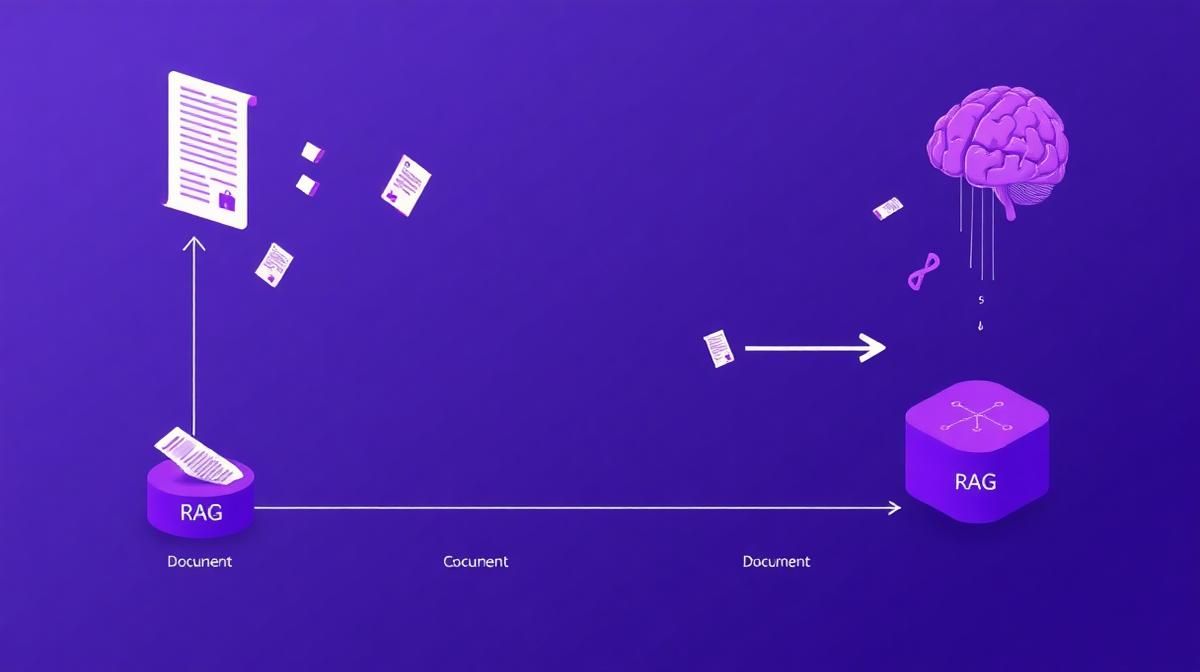
The field is swamped with claims of instant deployment, advanced RAG capabilities, and transformative AI workflows. However, upon closer inspection, the reality is sobering. Most platforms rely on single Large Language Models (LLMs), offering limited flexibility and struggling with the complexities of real-world scenarios. In most cases, their touted Retrieval-Augmented Generation (RAG) functionalities often amount to basic integrations that fail to address the nuanced needs of a customer-centric production environment.
Accuracy, Reliability, and Productivity Matter
An AI assistant is only as good as its ability to serve end-users effectively. Here’s why these factors are non-negotiable:
Accuracy
Inaccurate responses can erode trust and lead to costly errors, especially in fields like healthcare, finance, and customer service.
Reliable AI must ground its answers in verifiable, contextually appropriate data, a task that goes beyond simplistic black-box RAG implementations.
Reliability
End-users need assistants that perform consistently, without unexpected "hallucinations" or unproductive responses.
Achieving reliability demands granular control over every aspect of the RAG workflow, from chunking and embeddings to vector database platforms, and configurations.
Productivity
AI should empower teams, not create new inefficiencies. Solutions must streamline workflows, reduce response times, and offer real, actionable assistance.
True productivity comes from mission-critical deployment experience, not marketing hype and beta-grade releases.
Pitfalls of the Current Landscape
- Single LLM Dependencies: Limiting functionality to a single LLM constrains adaptability, prevents multi-vendor optimizations, and hinders performance in diverse use cases.
- Superficial RAG Integrations: Black-box RAG solutions offer minimal transparency, often failing to optimize retrieval or provide developers with control over embeddings, chunking strategies, or context prioritization.
- Lack of Real-World Testing: Few platforms have been stress-tested in live production environments. The result? Assistants that frustrate users with irrelevant answers, poor escalation paths, and limited conversational depth.
What Sets Truly Capable AI Assistants Apart
- Chunking Strategy: Ensuring accurate data integrity and structure.
- Embedding Optimization: Ensuring accurate data representation.
- Semantic Indexing: Organizing data for precise, context-driven retrieval.
- Vector Databases: Leveraging specialized storage for real-time relevance.
Redefining the Standards
The AI assistant industry needs to raise its standards. Prospective clients should look beyond unlimited marketing budgets and flashy claims to evaluate platforms based on their depth of functionality, proven results, and adaptability. Developers and vendors should commit to creating assistants that are trustworthy partners, not just another “check-mark” in their product line.
Building Better AI Assistants
The AI gold rush has brought both immense promise and peril. To truly harness the transformative potential of AI, the industry must prioritize accuracy, reliability, and productivity. Businesses should demand transparent, well-engineered solutions, not shortcuts. Together, we can move beyond the hype and build AI assistants that elevate user experiences and redefine productivity.